From Introduction to Collaboration: Lily-Rose Petrov × LazenbyBrown

An introduction by MIDLE founder Luke Savage connected product designer Lily-Rose Petrov with a practical challenge at LazenbyBrown. The resulting magazine stand gave the studio a bespoke solution—and Lily the opportunity to take a real client project from initial sketches to a product in use.
For a printed magazine, reaching an audience involves more than getting copies through the printer. Once a publication arrives in a shop or café, it needs somewhere to sit: somewhere visible, accessible and sturdy enough to withstand being picked up, browsed and refilled.
For Mat Lazenby, the existing magazine holders weren’t doing that job well enough. Pre-cut A5 holders had proved insufficiently durable. More expensive wooden laser-cut versions had also fallen short.
The brief for a replacement was straightforward but demanding. It needed to attract attention, display a QR code and feel substantial without becoming bulky. Value mattered, but resilience had become particularly important to Mat and the publication’s network of distributors.
It was a problem that called for product-design thinking.
Making the introduction
Luke recognised a potential match between the brief and Lily’s skills and put her in touch with Mat.
Lily, who has since completed her MSc in Product Design at York St John University, describes a practice focused on sustainable and inclusive design. She is interested in thoughtful, accessible products that respond to everyday needs, with material choices and practical use considered from the outset.

Mat was open to working with an emerging designer because of the talent available and the possibility of creating something genuinely bespoke. He was optimistic about the introduction, while conscious that student collaborations can involve a learning curve around commercial timings, costs and availability.
The connection gave them a specific starting point: an existing problem, a relevant set of skills and a physical outcome to work towards.
Designing around the publication
Lily understood durability to be central to the brief. But replacing a flimsy holder also offered an opportunity to make the stand feel more closely connected to the publication it displayed.
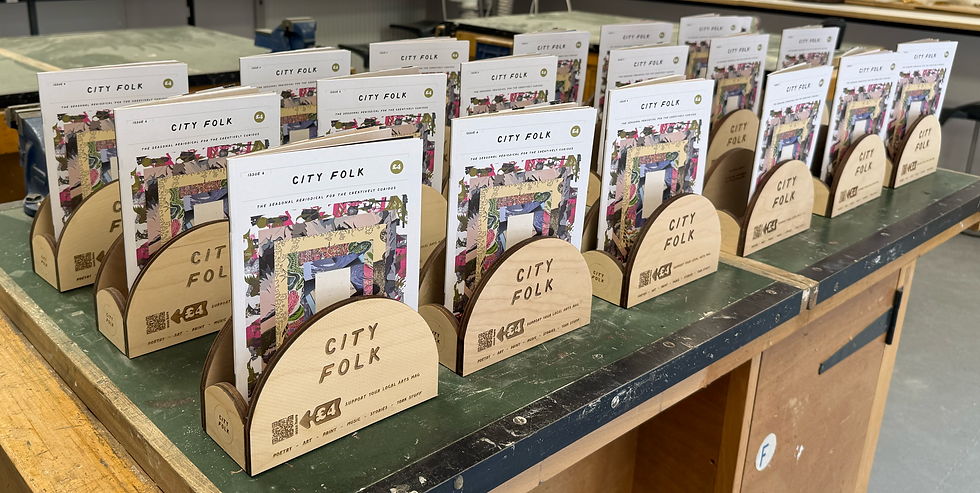
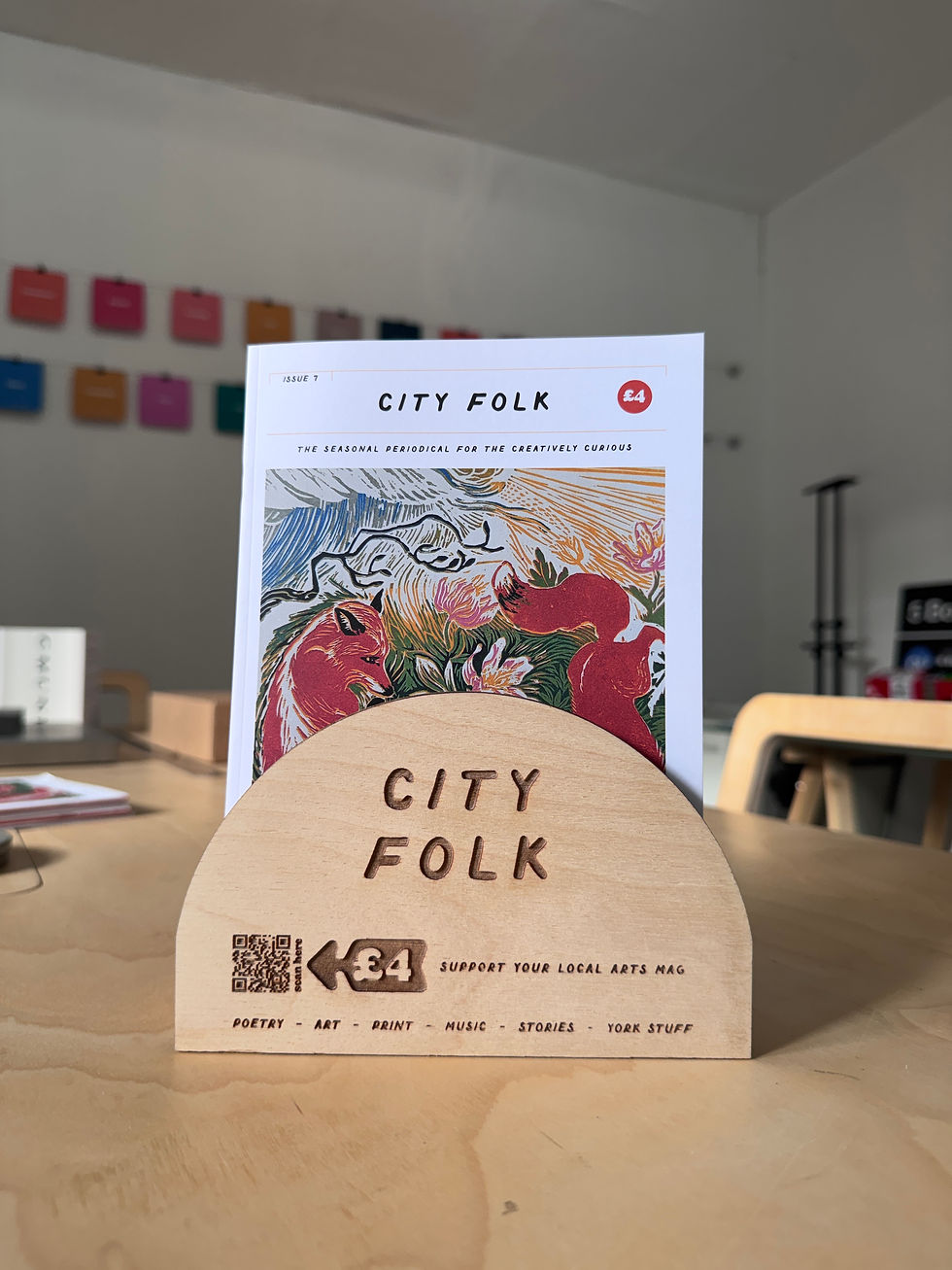
Material, scale and visual weight became early considerations. The stand needed enough strength to support the magazines without overwhelming them. Its role was to frame the publication and make it accessible, while allowing the cover to remain the focus.
Lily began with sketches exploring different forms, proportions and construction methods. Greyboard prototypes helped her assess the structure and dimensions quickly, before she developed plywood versions of the strongest concepts.
Those more substantial models made it possible to discuss how the stand would look, feel and function. Presenting physical options also gave the feedback process something concrete to work with.
The final design used a simple slotted construction, allowing its components to fit together securely without unnecessary complexity. Lily describes carefully considering the proportions to support at least 15 magazines while limiting unnecessary material use. Ease of manufacture and assembly informed the solution alongside appearance and strength.
Learning through a real brief
For Lily, working directly with Mat made feedback quicker and more immediate. She initially had space to explore the brief independently, then used his responses to refine the design.
The practical expectations of a client also changed the weight of each decision. Material selection, cost, manufacture and durability were requirements that the finished product had to meet.
“As one of my first experiences working directly with a client, it was extremely valuable,” Lily reflects. “It helped build my confidence in presenting ideas, responding to feedback and making design decisions collaboratively, which I can now carry forward into future client relationships.”
That experience extended beyond designing the object. Lily coordinated workshop access, material ordering and delivery, prototyping, manufacture and final delivery within a defined timeframe. She also had to explain her decisions: discussing costs, justifying materials and presenting different iterations clearly.
Taking responsibility for the whole process gave her a broader understanding of how a project progresses from a conversation to a finished product.
A stand with a public life
Mat’s assessment of the collaboration is emphatic.
“Absolutely faultless from start to finish, in fact she exceeded our expectations across the board.”
He describes Lily’s initial proposals as already close to what was needed, with only small alterations requested. For him, the final stand feels “fun, elegant and very substantial”. He reports that it has made refilling easier and that the businesses displaying it are proud to have it on their counters.
For Lily, seeing the stands in use brought a different kind of satisfaction from completing work for assessment.
Having grown up around York, she could show her parents and grandparents something she had designed being used in local shops and cafés. “Seeing the stands functioning as intended gave the project a sense of permanence and purpose that is difficult to replicate through assessment alone,” she explains. The outcome was something she could point to in the everyday life of the city: a product she had developed, manufactured and delivered, now doing the job it was designed for.
What the connection made possible
This collaboration offered value to both sides. Mat gained a bespoke response to an unresolved practical problem. Lily gained experience of managing a client relationship and carrying a design through to manufacture and use.
Mat sees smaller projects as a useful way for studios and emerging creatives to begin working together, with a shared purpose that extends beyond simply giving someone experience. He also identifies matching people at the right moment as central to making those relationships work.
For MIDLE, the project illustrates the value of a considered introduction. Luke helped connect the people; Lily and Mat developed the working relationship and delivered the outcome.
It is one example of how emerging creative practice can find a place beyond education: through a manageable brief, relevant skills, constructive feedback and the opportunity to take responsibility for something real.
Design and production: Lily-Rose Petrov
Brief and client feedback: Mat Lazenby / LazenbyBrown
Introduction: Luke Savage, founder of MIDLE
Words: Based on written responses from Lily-Rose Petrov and Mat Lazenby
Comments